

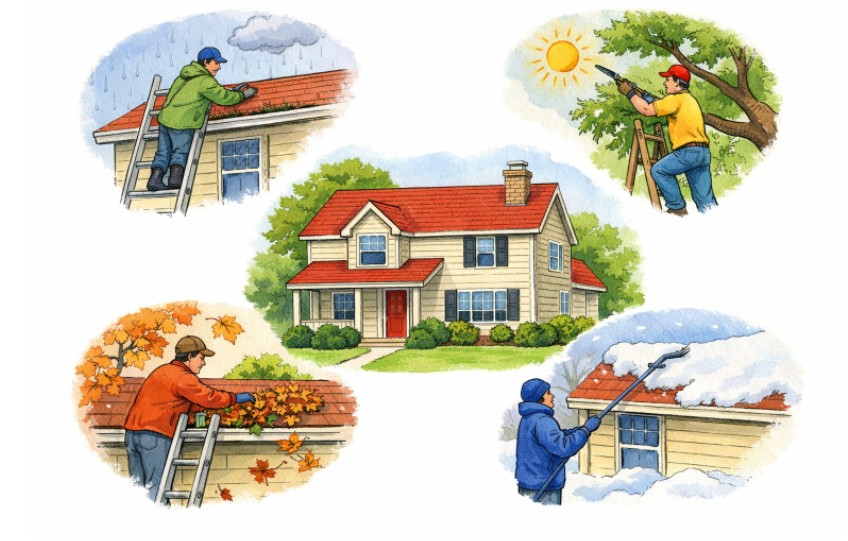
Maintaining your roof year-round is essential for protecting your home from the elements and extending the life of your roofing materials. Every season presents different challenges, so taking proactive steps reduces the risk of costly repairs. Homeowners seeking to avoid common roof pitfalls should prioritize regular inspections, regardless of the weather. For those seeking expert advice or repairs, finding trusted roofers in Ohio can make a significant difference in the long-term health of their roofs.
Homeowners can avoid unexpected issues and make economical choices by understanding the seasonal requirements of roof upkeep. Strategic, timely maintenance prevents minor problems from escalating and helps preserve your home’s value. Whether you’ve recently installed a new roof or want to extend the life of your existing one, knowing what to look for and when is key. As the seasons change, so should your roof maintenance approach, adapting to everything from heavy spring rains to winter snow loads.
Spring: Post-Winter Recovery
Spring is a critical period for roof maintenance, especially after winter’s heavy snow, ice, and fluctuating temperatures. Begin by conducting a thorough inspection, looking for missing or damaged shingles and inspecting vulnerable areas such as chimneys, vents, skylights, and flashing. Early spring is also the perfect time to clean out gutters and downspouts, ensuring rainwater can flow freely away from your roof and foundation.
Additionally, be alert for mold, mildew, or algae, which can thrive in damp environments left behind by melting snow. Addressing these issues promptly not only improves your roof’s appearance but also helps prevent structural damage. Routine roof care after winter is among the top recommendations from trusted sources like Better Homes & Gardens.
Summer: Heat and Storm Preparedness
Summer presents new challenges due to higher temperatures and unpredictable storms. Begin by checking your shingles for signs of heat stress, such as curling, cracking, or blistering. Make sure your attic is properly ventilated to minimize heat buildup, which can cause premature aging of roofing materials.
Storm preparedness should also be a priority. Inspect and secure loose shingles, ensure all flashing around chimneys and skylights is intact, and identify any areas susceptible to leaks or wind damage. Cutting back overhanging tree branches protects the roof from limb damage during weather events. The Family Handyman’s roof maintenance checklist also emphasizes the importance of managing trees and debris during stormy months.
Fall: Pre-Winter Preparation
The fall season is all about setting your roof up for success before another harsh winter arrives. Start by giving gutters a deep clean, removing leaves and organic matter to prevent blockages that can cause water to back up under your shingles. Check the roof surface and flashing around chimneys, vents, and skylights for looseness or damage, and make repairs as necessary to maintain a tight seal against moisture intrusion.
Now is also the time to inspect your attic insulation. Proper insulation keeps roof temperatures consistent, preventing ice dams from forming during freeze-thaw cycles. Addressing insulation needs during the fall helps maintain energy efficiency and protects your roof against snow and ice accumulation when winter arrives.
Winter: Snow and Ice Management
Winter brings a unique set of challenges for your roof, from excess snow buildup to the threat of ice dams. Use a roof rake designed for snow removal to keep heavy snow loads at bay, but avoid using metal tools that could damage your shingles. Monitor rooftop ice formations carefully; the presence of ice dams may indicate insufficient attic ventilation or poor insulation.
After heavy snow or ice storms, perform visual inspections from the ground to spot sagging areas, missing shingles, or disrupted flashing. Taking prompt action to remedy winter-related issues helps avoid leaks and structural damage that could require extensive repairs come spring.
Professional Inspections: An Annual Necessity
While seasonal maintenance by homeowners is invaluable, an annual inspection from a professional roofing contractor provides an added safety net. Pros have the experience and equipment to spot hidden issues that might escape an untrained eye, and can recommend necessary fixes before small issues escalate. Many homeowners schedule these inspections in the spring or fall to dovetail with their own maintenance efforts, but any time of year can be appropriate if you suspect a problem with your roof’s condition.
Conclusion
Consistent and season-specific roof maintenance is crucial for safeguarding your home, preventing major damage, and avoiding costly emergency repairs. By planning regular maintenance, promptly addressing seasonal challenges, and scheduling professional inspections, you ensure your roof is ready to perform year-round. Incorporate these strategies to increase your home’s resilience and protect your investment for many seasons to come.
